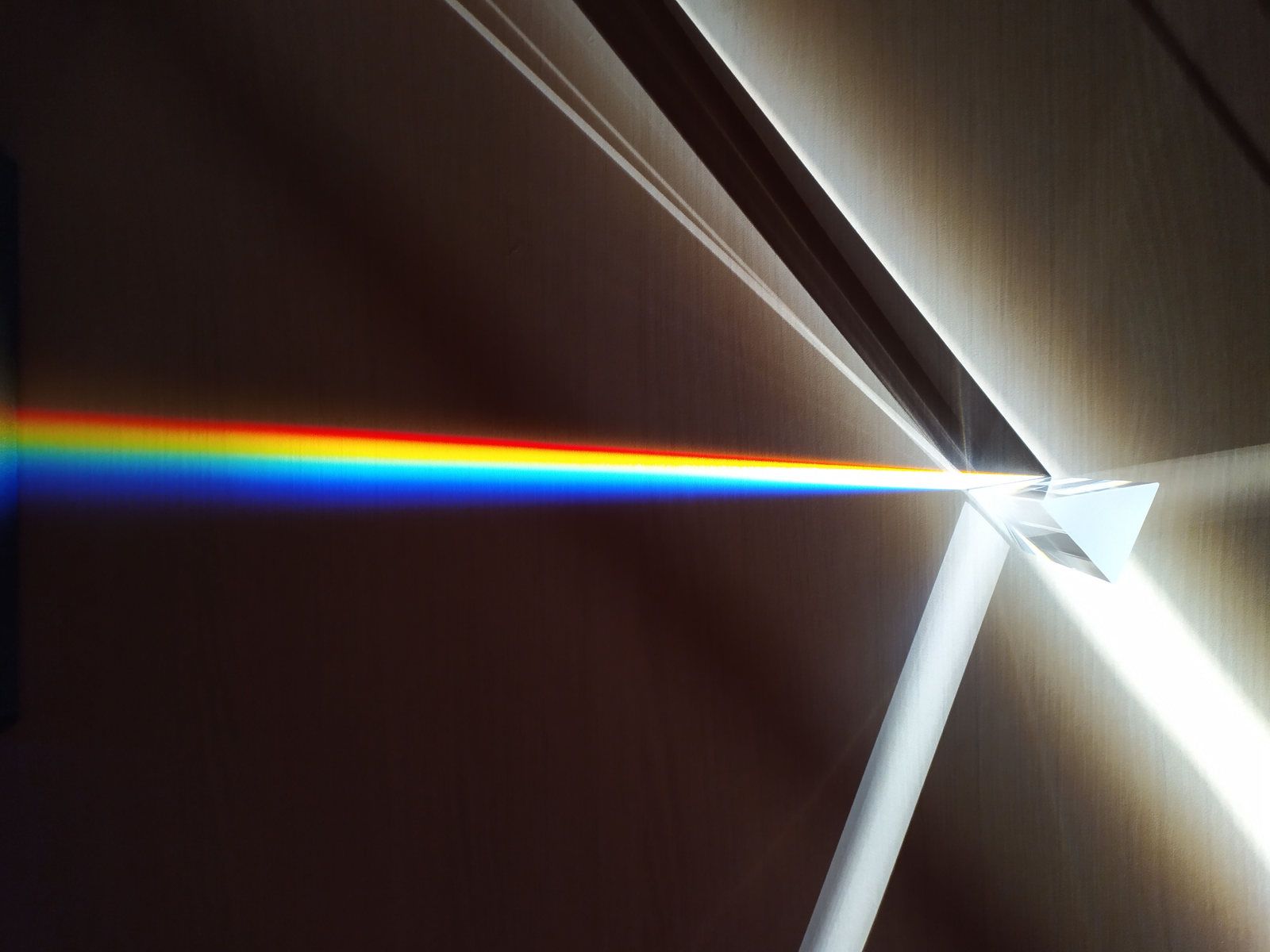
Light & color4 min read
Where does color come from?
From wavelengths to the world we experience.
Explore the story
The same image. A different spectrum of possibilities.
About the simulationUnderstanding color vision
Color vision is not one single experience.These modes are reference points, not a completepicture of how any individual sees.
Typical trichromacy
Three cone classes (L, M, S) work together to distinguish a broad range of colors. Use this as your original reference.
L-cone function absent
Some reds and greens become harder to distinguish.
M-cone function absent
Red–green differences are reduced.
S-cone function absent
Blue–green and yellow–pink distinctions can be hard to make. This is a different type from red–green color vision deficiency.
Little or no color discrimination
Complete achromatopsia removes color discrimination. This preview shows luminance only, not its other visual effects.
These examples show full dichromacy or monochrome illustration. Partial differences, such as anomalous trichromacy, are not represented.
Related discoveries
Follow a question beyond the image.
Light & color4 min read
From wavelengths to the world we experience.
Explore the story
Color perceptionGuide
Cones, context and individual differences.
Explore color perception
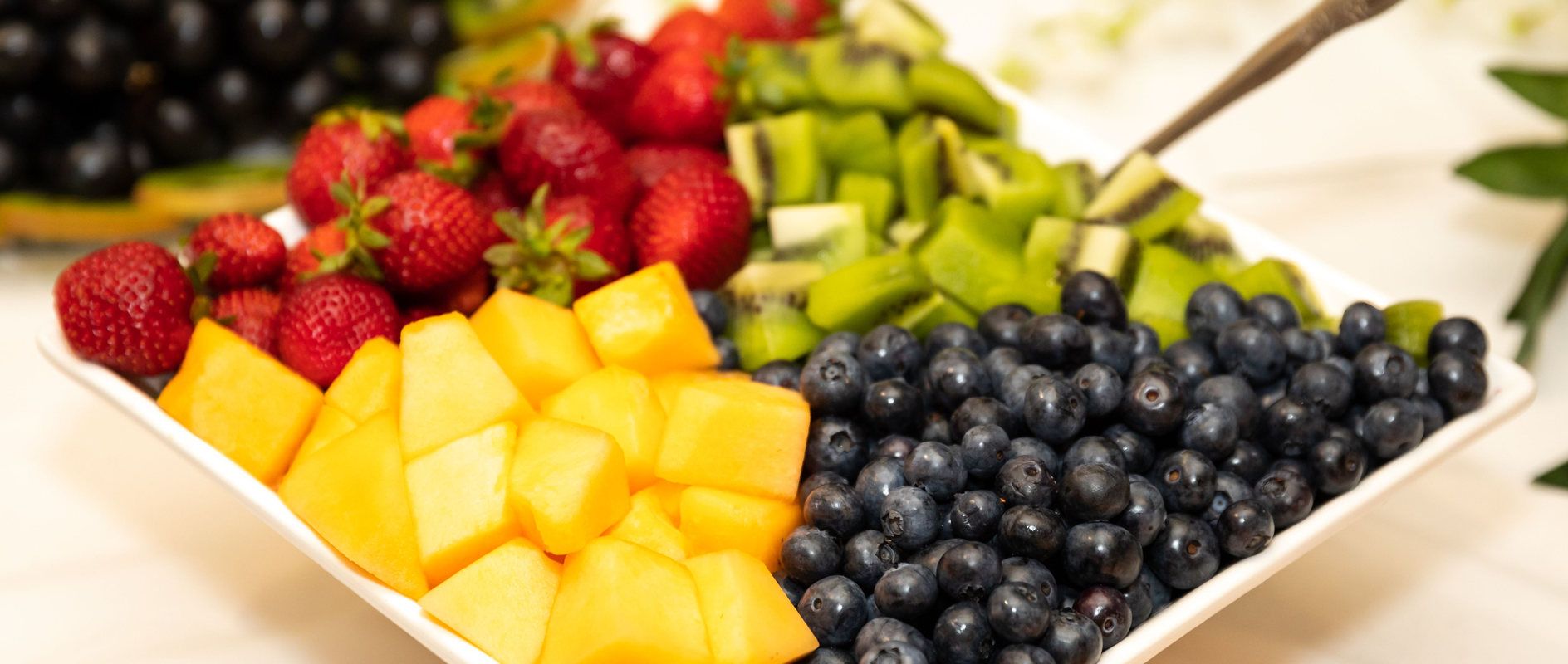
Animal vision5 min read
A different kind of color world.
Read the story

The science, with context
A simulation can reveal where color cues become less distinct. It cannot recreate someone’s lived visual experience.
01Model
Protanopia and deuteranopia use full-severity models after Viénot, Brettel & Mollon (1999); tritanopia follows Brettel, Viénot & Mollon (1997).
02Process
Decode sRGB to linear light, apply the mode’s transformation, then return to display RGB. Achromatopsia is illustrated with luminance only.
03Limits
Your display, ambient light and your own color vision affect the result. Individual differences, adaptation, glare and changes in visual acuity are not reproduced.
Research reference
Viénot, Brettel & Mollon (1999) · Digital video colourmaps for checking the legibility of displays by dichromats.
Read the research (opens in a new tab)This is not a color-vision test, a medical assessment or a substitute for professional eye care.
Short answers about what each mode shows, and what it cannot.
It depends on which cone signal is reduced or missing, and on the person. This simulator shows four complete forms next to the original: protanopia (no L-cone signal), deuteranopia (no M-cone signal), tritanopia (no S-cone signal) and achromatopsia (color removed, lightness kept). It does not show partial differences.
In protanopia the L signal is effectively absent, and in deuteranopia the M signal is. With one signal missing, some colors that differ for the human reference view are shown as similar colors. In this approximation, pure red and pure green both move toward yellow-olive tones and mainly differ in lightness.
No. It is an approximation of complete forms only. Real perception varies with the eye, the display and the viewing conditions, and a screen simulation cannot reproduce another person’s experience or diagnose anything.
No. This tool is for curiosity and education. It can’t tell you anything about your own vision. If you have questions about how you see color, an eye-care professional can help.
There’s more than one way to see the world.
Explore how clarity, contrast and changes in the visual field shape perception.
Explore the guide